
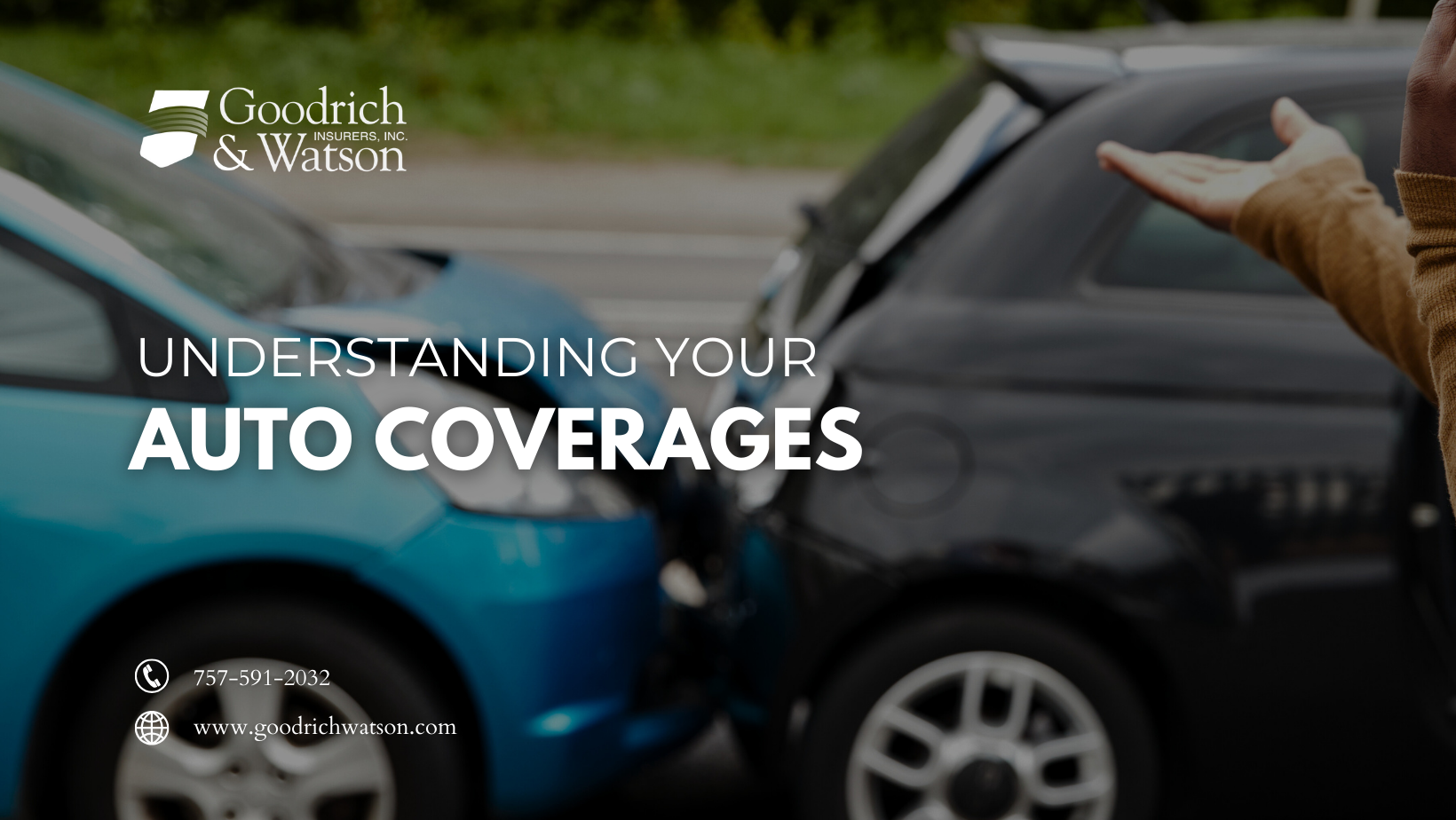
When diving into the world of auto insurance, the various types of coverage can seem overwhelming. At Goodrich & Watson Insurers, we want to help simplify things. You can think of your auto policy as having three distinct layers, starting with the most fundamental: liability.
1. Liability Coverage
At the base of your auto insurance is Liability Coverage. This is the foundational layer, mandated by state law, and is essential for almost any auto policy. It covers damage you cause to others in an accident, including medical expenses, lost wages, and property damage. It’s important to note, however, that liability coverage does not provide any protection for injuries to you or damage to your vehicle, only damage caused to others by you in the event of an accident.
But what about damage to your car? For that we have to add a layer.
2. Comprehensive Coverage
Next up, we have Comprehensive Coverage. Comprehensive is the first layer of protection that provides coverage for damage to your vehicle. But it’s limited. Comprehensive coverage provides protection against a wide range of scenarios, but it does not protect against damage caused by a collision. Think of comprehensive as safeguarding your car from the unexpected events life throws at it—like theft, vandalism, natural disasters, or even hitting a deer.
Here are some scenarios covered by comprehensive insurance:
-
Your car is stolen or broken into.
-
A tree limb falls on your car during a storm.
-
Your windshield is shattered by a stray baseball.
-
You hit a deer while driving.
It’s important to note as well that comprehensive coverage is a prerequisite for most of the other bells and whistles available as part of an auto insurance policy. For example, insurance companies will require comprehensive coverage to be included before they’ll even offer collision. Additionally, having comprehensive coverage opens the door for other optional coverage items such as rental reimbursement and towing/roadside assistance.
3. Collision Coverage
The final layer in your auto insurance policy is Collision Coverage. This type of coverage handles damage to your vehicle resulting from a collision, whether it’s with another vehicle, a person, or a stationary object like a tree, a guardrail, or a building.
With collision coverage, you are protected in situations like:
-
You rear-end another car.
-
You hit a pole in a parking lot.
-
You back into a garage door.
Once you add collision coverage to your policy, you have what’s commonly referred to as “full coverage.” This term implies that your vehicle is covered for both collision and non-collision events, and this is typically what’ll be required by lenders if you have a car payment.
Putting It All Together
Understanding these three layers can help clarify the complexities of auto insurance:
-
Liability Coverage is your starting point, mandated by law to protect others.
-
Comprehensive Coverage provides protection for your vehicle against non-collision damages and is required before you can add collision coverage.
-
Collision Coverage protects your vehicle in the event of an accident.
By knowing the roles each type of coverage plays, you can make more informed decisions about your auto insurance policy and ensure you have the protection you need.
Have a burning question? Need a car insurance quote? Contact us today at Goodrich & Watson Insurers in Newport News, VA, and we’ll connect you with an insurance expert!


